
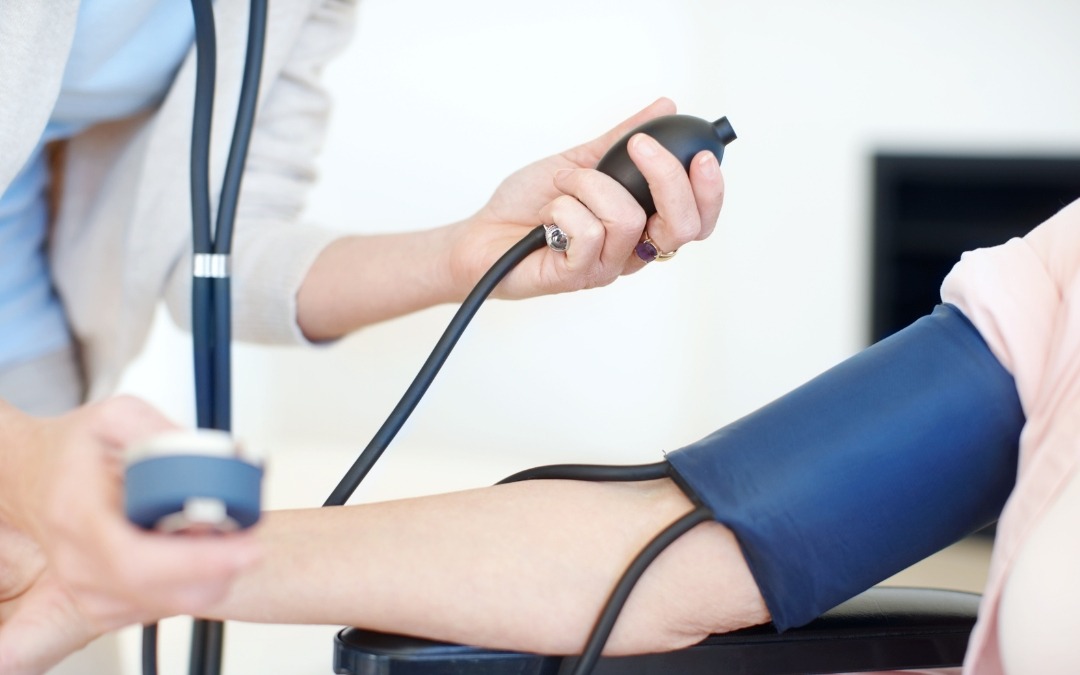
High blood pressure – known as hypertension – is one of the most common health conditions in South Africa, occurring in about 38% to 48% of our country’s population. Many people have it without knowing, because it often causes no symptoms.
Untreated high blood pressure increases the risk of stroke, heart attack, kidney disease, and heart failure. These conditions occur younger in South Africans than in other countries due to poor screening and awareness.
The good news is that hypertension is easy to detect and very treatable and this article will help you understand what hypertension is, how we diagnose it and how we manage your condition.
What Is Blood Pressure?
Blood pressure is the force of blood pushing against your arteries as your heart pumps. It is measured using a sphygmomanometer which traditionally uses mercury – hence the unit of measurement is millimetres of mercury (mmHg).
It’s written as two numbers, for example 130/80 mmHg:
-
- Top number (systolic): pressure when the heart beats
- Bottom number (diastolic): pressure when the heart relaxes
How Is Blood Pressure Classified?
Normal Blood Pressure
-
- Equal to or below 120/70
Elevated Blood Pressure
-
- 120–139 systolic and/or 70–89 diastolic
Elevated blood pressure is a newer term you may hear your doctor mention that allows us to identify at risk patients or even start treatment on certain patients with other illnesses such as diabetes or kidney disease.
High Blood Pressure (Hypertension)
-
- 140/90 or higher
This usually requires treatment.
Why Is High Blood Pressure So Important in South Africa?
South Africa has very high rates of stroke and heart disease, with current statistics showing us that these affect patients 15 years younger on average than in countries in Europe/North America.
Factors that increase risk locally include:
-
- High salt intake (especially from processed foods and seasoning powders)
- Obesity
- Physical inactivity
- Smoking
- Diabetes
- Limited access to regular healthcare for many communities
Because high blood pressure often has no symptoms, many people only discover it after a serious complication like a stroke. Hence the need to increase screening in our communities.
How Is Blood Pressure Diagnosed Properly?
Most of the time your doctor will want to take a series of blood pressure readings to make a diagnosis of hypertension to avoid overdiagnosis.
Doctors recommend:
-
- Home blood pressure monitoring using a validated blood pressure machine and a diary, or
- 24-hour blood pressure monitoring known commonly as a holter BP where a special BP machine is attached to you and gives us your average BP over 24 hours (this is something we commonly do for our patients in our practice).
These methods help avoid:
-
- White-coat hypertension (high readings only when you see the doctor or nurse)
- Masked hypertension (normal when we measure but high at home)
If home monitoring isn’t possible though, repeating the measurements at our practice will still help us make a diagnosis.
Your doctor may also order blood tests when working you up for hypertension to check for any potential causes and complications of hypertension and to make sure they choose the right medication for you.
What Should My Blood Pressure Target Be?
For most adults on treatment, the recommended goal is a Systolic blood pressure between 120 and 129
Lowering blood pressure into this range reduces the risk of strokes and heart attacks.
Targets may be adjusted if you:
-
- Feel dizzy or light-headed
- Are over the age of 85
- Have other medical conditions
Your doctor will work with you to individualise your target to best suit you.
Lifestyle Changes That Really Make a Difference
Lifestyle changes are recommended for everyone with raised blood pressure.
Key steps include:
-
- Reducing your salt intake (avoid adding salt at the table; limit stock cubes, processed meats, packet soups, and sauces)
- Exercising regularly if you can (simple exercise such as going for a 30-minute walk once a day will help with your blood pressure control)
- Maintain a healthy weight
- Eat more vegetables and fruit
- Limit alcohol
- Stop smoking
These changes often reduce the need for higher doses of medication.
When Is Medication Needed?
Medication is usually recommended if:
-
- Blood pressure is 140/90 or higher, or
- Blood pressure is elevated and you have other risks (such as diabetes, kidney disease, or previous stroke)
The current recommendations are that we start on a combination of medications instead of just one to improve control of blood pressures. This is done by using pills containing multiple medications in them to make it easier for patients to use.
Unfortunately, these combination tablets aren’t currently available at public hospitals and clinics, but the individual medications used are the same as in private. Some medical aids also require us to follow a stepwise approach to treatment and may only pay for combination medications after we have tried an individual medicine first.
Frequently Asked Questions (FAQ)
Can I feel high blood pressure?
Usually not. Most people feel completely normal — which is why hypertension is called the “silent killer.”
Do I need to take tablets for life?
Often, yes. High blood pressure tends to return if medication is stopped.
However, good lifestyle changes may reduce the number or dose of tablets needed.
How much does this all cost?
In South Africa, hypertension is a prescribed minimum benefit (PMB) condition which means that medical aid schemes are required by law to pay for your appointments, tests and medications. This includes hospital plans. The exact benefits will differ depending on which medical aid/hospital plan option you have. Please note that some medical aid options require you to go to a state clinic for your treatment if that is in your contract. You can check with your broker/scheme to get more information.
Is stress the main cause of high blood pressure?
Stress can raise blood pressure temporarily, but long-term hypertension is usually caused by a combination of genetics, diet (especially salt), weight, and physical inactivity.
Are traditional or herbal medicines safe for blood pressure?
Some herbal remedies may interfere with prescribed medication or affect kidney function.
Always tell your doctor or nurse if you are using traditional remedies.
What blood pressure machine should I use at home?
Use an upper-arm cuff machine that has been clinically validated. Wrist and finger machines are less reliable.
What if my blood pressure is high at the clinic but normal at home?
This is common and is called white-coat hypertension. Home or 24-hour monitoring helps clarify this.
How often should I check my blood pressure?
-
- If normal: at least twice a year
- If elevated or treated: as advised by your healthcare provider, often weekly or monthly
What can we do for you at HMCD
Making an appointment with one of our doctors will allow them to screen you for hypertension, go through your medical history, identify risk factors for heart disease and strokes and order any special tests that may be necessary to ensure an accurate diagnosis.
At HMCD we also have the facilities and equipment to do electrocardiograms, fundoscopy photographs (a special photo of the back of your eye that allows us to identify any potential risk or disease) and 24-hour home blood pressure monitoring.
Our doctors are equipped with up-to-date knowledge to guide your treatment, and when necessary, our established relationships with local specialists allow for ease of referral if there are any complications with your condition.
Take-Home Message
High blood pressure is common, serious, and often unnoticed — but it is one of the most treatable risk factors for heart disease and stroke.
Regular checks, healthier daily habits, and the right treatment can protect your heart, brain, and kidneys for years to come.
If you haven’t checked your blood pressure recently, make an appointment with one of our doctors at HMCD.
References:
John William McEvoy et al, ESC Scientific Document Group , 2024 ESC Guidelines for the management of elevated blood pressure and hypertension: Developed by the task force on the management of elevated blood pressure and hypertension of the European Society of Cardiology (ESC) and endorsed by the European Society of Endocrinology (ESE) and the European Stroke Organisation (ESO) European Heart Journal, Volume 45, Issue 38, 7 October 2024, Pages 3912–4018, https://doi.org/10.1093/eurheartj/ehae178 Woodiwiss, A.J., Orchard, A., Mels, C.M.C. et al. High prevalence but lack of awareness of hypertension in South Africa, particularly among men and young adults. J Hum Hypertens 39, 111–119 (2025). https://doi.org/10.1038/s41371-023-00873-3